Widespread Pain
Chronic, deep aching pain affecting multiple areas of the body, often described as burning, stabbing, or shooting. It is typically bilateral, above and below the waist, and lasts 3 months or more.
Fibromyalgia Specialist
A complex chronic pain condition affecting millions worldwide. Help if widespread pain comes with fibro fog, brain fog, fatigue, or nights you cannot sleep. Our multidisciplinary team provides evidence-based treatment for pain management, without claiming a cure.

Overview
Fibromyalgia is a chronic disorder characterised by widespread musculoskeletal pain, fatigue, and tenderness in localised areas. It affects around 2 to 4% of people, with a female to male ratio of about 7:1.
The nervous system can become hypersensitive, amplifying pain signals so that normal sensations feel painful. There is no single cure, but effective treatment can significantly improve symptoms and quality of life.
Help is available, and you do not have to manage this on your own.
Symptoms
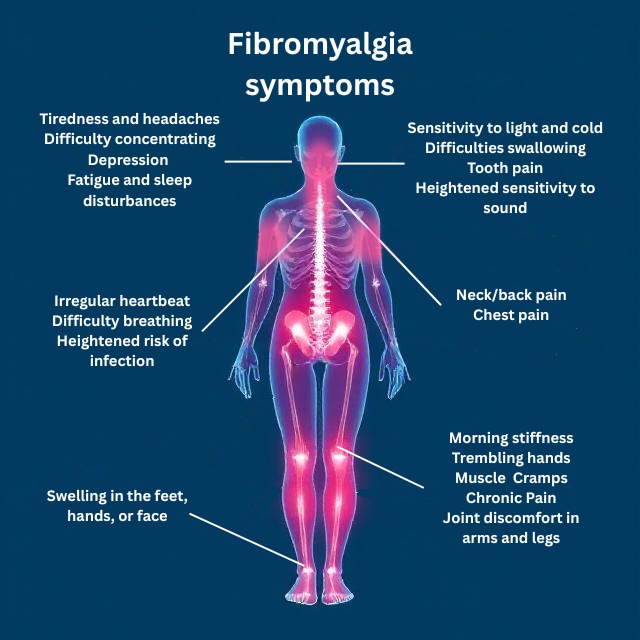
Fibromyalgia presents with a constellation of symptoms that can vary in intensity and impact between individuals.
Chronic, deep aching pain affecting multiple areas of the body, often described as burning, stabbing, or shooting. It is typically bilateral, above and below the waist, and lasts 3 months or more.
Profound exhaustion that does not improve with rest, often accompanied by non-restorative sleep, morning stiffness, and energy crashes. See sleep and pain.
Cognitive difficulties including problems with concentration, memory, and mental clarity, which can affect daily tasks and work performance.
Heightened sensitivity to light, sound, touch, temperature, and other stimuli that can trigger or worsen fibromyalgia symptoms.
Depression, anxiety, and mood fluctuations often associated with chronic pain and the challenges of living with fibromyalgia.
Irritable bowel syndrome (IBS) and other gastrointestinal symptoms commonly co-occur with fibromyalgia in many patients.
Causes
If these symptoms have lasted and are affecting your sleep, work, or daily life, a specialist assessment can help.
Pain on both sides of the body, above and below the waist, that is not settling.
Exhaustion and non-restorative sleep are a reason to be assessed, not waited out.
Memory and mental clarity problems that make daily tasks harder.
Normal sensations that now feel painful or overwhelming.
Anxiety or low mood often travel with long-term widespread pain.
If conservative care has not settled the symptoms, a pain specialist can review other options, including infusion therapy.
Treatments
A comprehensive, multidisciplinary strategy combining medical expertise with personalised care. This may include medication, rehabilitation, and intravenous lidocaine infusion. You can also read our clinical research article on lidocaine and fibromyalgia.
Explore TreatmentsIntravenous lidocaine can help calm overactive pain signals in fibromyalgia. Responses vary: some people report relief lasting weeks or months, others need a different approach.
Evidence-based medication tailored to your symptoms, which may include pain modulators such as gabapentinoids or SNRIs, and support for sleep.
Graduated exercise, pacing, and movement programmes designed to improve function without flaring symptoms. Often a key part of long-term management.
How it works
Getting started is straightforward.
If you know the type of pain you're experiencing, you can request an appointment online or give us a call - it only takes a couple of minutes. If you're unsure where to start, please give us a call. Our team will be happy to listen, answer your questions, and help guide you toward the most appropriate next step.
Your consultation will usually last 30–45 minutes with one of our experienced pain specialists. This gives your doctor time to understand your symptoms, review your medical history, discuss any previous treatments, and consider the most appropriate next steps for you. The consultation fee is €350, payable on the day of your appointment.
We'll create an individual, tailored pain management plan based on your needs. This may include a combination of treatments, procedures, or infusions, with review appointments to monitor your progress and ongoing care from our experienced pain specialists.
Common questions
A GP referral is required for insurance cover of any treatments or procedures. If you are self-paying, a GP referral may not be required. Please bring any relevant medical information, reports, scans, or medication details to your appointment. Our current waiting time is typically 1–2 weeks.
Fibromyalgia is a chronic disorder characterised by widespread musculoskeletal pain, fatigue, and tenderness in localised areas. The nervous system can become hypersensitive, amplifying pain signals.
There is no single cure, but effective treatments can significantly improve symptoms and quality of life for many people. A tailored plan may include medication, rehabilitation, and in some cases intravenous lidocaine infusion.
Yes. Intravenous lidocaine infusion is one of the treatments we use for fibromyalgia when tablets and conservative care have not been enough. Responses vary. You can read more in our research article on lidocaine and fibromyalgia.
We accept all the major insurers. We recommend checking with your insurer to confirm what is covered under your specific policy.
Usually within 1 to 2 weeks. If it's urgent, let us know and we'll try to fit you in sooner.
Your first visit lasts about 30 to 45 minutes. The specialist will go through your medical history, carry out an examination, and discuss your symptoms with you. From there, we create a tailored pain management plan designed around your case.
Conditions we treat